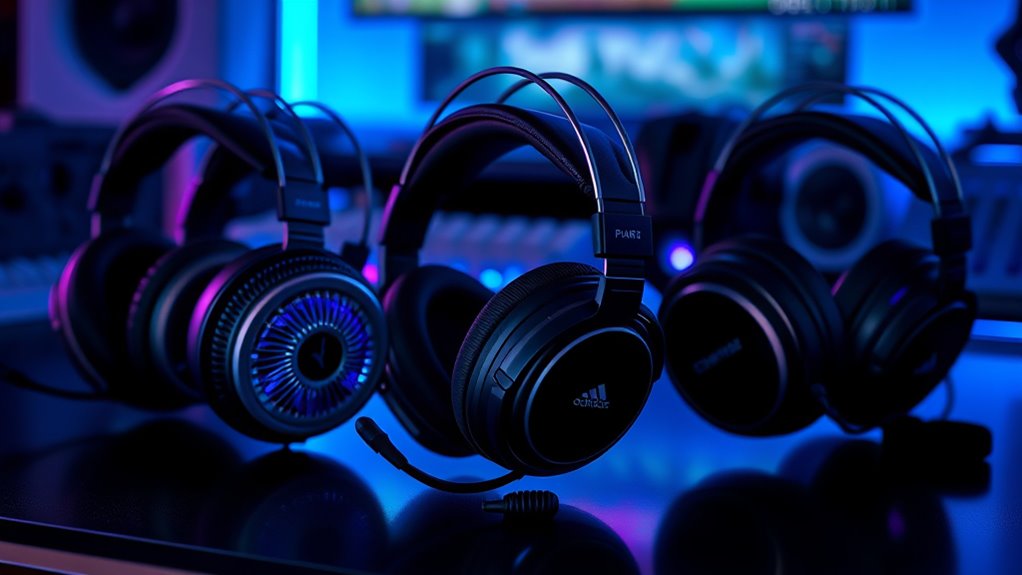
Unlock Your Gaming Potential: Why Open-Back Audiophile Headphones are a Game-Changer
In the competitive world of PC gaming, every advantage counts. While many gamers focus on graphics cards, processors, and high refresh rate monitors, a crucial element often gets overlooked: audio. For too long, the market has pushed "gaming headsets" as the ultimate solution, often sacrificing true sound quality for flashy features and aggressive aesthetics. But what if there was a better way? What if you could experience unparalleled audio fidelity, pinpoint enemy locations, and immerse yourself in game worlds like never before? The answer lies in open-back audiophile headphones.
If you're ready to move beyond the limitations of overpriced gaming headsets and discover a superior sonic experience, you're in the right place. This article will explain why audiophile headphones win for gaming, specifically focusing on the transformative benefits of open-back designs, and help you choose the perfect pair to elevate your gameplay.
The Open-Back Advantage: Unpacking Soundstage and Imaging
When gamers discuss high-performance audio, two terms frequently arise: soundstage and imaging. These are the cornerstones of an immersive and competitively advantageous listening experience, and open-back headphones excel in both areas.
What's the Difference: Open-Back vs. Closed-Back?
- Closed-Back Headphones: These headphones have solid earcups that completely seal off your ears. They provide excellent sound isolation, preventing sound from leaking in or out. This is ideal for noisy environments or public use, as they keep your audio private. However, this enclosed design can sometimes create a smaller, more "in-your-head" sound.
- Open-Back Headphones: In contrast, open-back headphones feature earcups with perforations or grilles, allowing air and sound to pass through. This design prevents pressure buildup and allows the headphone drivers to move more freely. The result is a much more natural, spacious, and airy sound that feels like it's coming from outside the headphones, rather than directly into your ears.
Soundstage: Your Virtual Battleground Expands
The "soundstage" refers to the perceived spatial environment created by the headphones. With open-back designs, the soundstage is significantly wider and deeper. Imagine the difference between listening to music in a small, cramped room versus a large concert hall. Open-back headphones create a sense of space that makes game environments feel vast and realistic. This is particularly impactful when using virtual surround sound modes in games, as the inherent spaciousness of open-back headphones enhances the effect, allowing you to truly feel enveloped by the game world.
Imaging: Pinpoint Precision for Competitive Edge
While soundstage creates the environment, "imaging" is about the precision with which individual sounds are localized within that environment. Excellent imaging allows you to accurately pinpoint the direction and distance of sounds – crucial for competitive gamers. Hearing those crispy footsteps, distant gunshots, or the rustle of an opponent in an FPS game isn't just about hearing them; it's about knowing *exactly* where they are. Open-back audiophile headphones provide this level of detail and positional accuracy, giving you a distinct competitive advantage by allowing you to react faster and more strategically.
The Trade-off: Sound Leakage and Environment
It's important to acknowledge the primary downside of open-back designs: sound leakage. Due to their open nature, sound will escape the headphones and be audible to those around you, and external noise can also easily enter. This means open-back headphones are not ideal for:
- Noisy environments (e.g., a busy living room with others watching TV).
- Public spaces (e.g., commuting, offices).
- Situations where you need complete privacy for your audio.
For most dedicated gaming setups in a relatively quiet home office or private gaming den, however, this limitation is negligible and easily outweighed by the immense sonic benefits.
Selecting Your Sonic Arsenal: Top Open-Back Audiophile Headphones for Gaming
The good news is that investing in audiophile headphones for gaming doesn't always require breaking the bank. There's a wide range of excellent open-back options suitable for various budgets. Once you venture into the ~$100-$200+ range, you truly begin to see a significant leap in quality and performance.
Entry-Level Excellence (Under $100-$150)
You don't need to spend a fortune to experience the benefits of open-back sound. These entry-level options offer incredible value:
- Samson SR850: Often touted as an incredible entry-level studio set, the SR850 delivers a surprisingly wide soundstage and clear audio for its price. It's a fantastic starting point for gamers looking to upgrade without a huge investment.
- Philips SHP9500: A legendary recommendation for budget audiophiles and gamers alike. Once "broken in" (meaning the drivers have had some hours of use to settle into their optimal performance), the SHP9500 offers an expansive soundstage, neutral sound signature, and impressive detail retrieval. Many consider it one of the best bangs for your buck in the entire headphone market.
Mid-Range Mastery ($150-$300)
Stepping up a bit in price opens the door to even greater refinement, comfort, and driver quality:
- Sennheiser HD 599 (or HD 598): Sennheiser is a household name in audio, and their 500 series is renowned for comfort and excellent sound. The HD 599 in particular offers superb sound quality and build, embodying the "you get what you pay for" adage. A significant advantage of the 599 is that it's relatively easy to drive, meaning you often won't need a dedicated amplifier/DAC, making it a convenient plug-and-play solution for many systems. It also features a higher quality driver than its predecessor (HD 579), resulting in less distortion and clearer audio.
High-Performance Contenders (Over $300)
For those serious about competitive gaming and unparalleled immersion, these headphones offer top-tier performance:
- Audeze LCD-GX: (Self-analysis addition, drawing from general audiophile knowledge and competitor context) While not explicitly in the reference, Audeze is a prominent name in high-end planar magnetic headphones. Their gaming-specific offerings like the LCD-GX bring the benefits of planar drivers (fast transients, deep bass, exceptional clarity) to gaming with an open-back design, resulting in an incredibly detailed and spacious sound.
- Acoustic Research AR5000: Mentioned as a "great casual listening set for the price" and also a "great gaming headphone." This versatility is a key characteristic of many audiophile headphones – they excel in both music and gaming.
- Sennheiser HD 490 Pro: This headphone has quickly earned a reputation as one of the "best gaming headphones on the market." It's praised for delivering many of the upsides of the venerable HD 800 S (renowned for its imaging and soundstage) but at a more accessible price point. A major benefit is its versatility, often coming with "producer pads" for an immersive sound and "mixing pads" for a flatter, more competitive audio profile. This allows gamers to tailor their sound experience based on their current needs. Comfort is also a significant highlight for long gaming sessions.
When choosing, prioritize headphones known for excellent clarity, a neutral-to-slightly-warm sound profile (avoiding overly boosted bass that can muddy details), and exceptional detail retrieval. These characteristics are what truly make a difference in identifying critical in-game sounds.
Beyond the Cans: Amps, DACs, and Microphones for the Ultimate Setup
While audiophile headphones are the star of the show, optimizing your entire audio chain can further enhance your experience.
Do You Need an Amp/DAC?
A common question for newcomers is whether they need a separate Digital-to-Analog Converter (DAC) and a headphone amplifier (amp). Here's a quick breakdown:
- DAC: Your computer's sound card has a built-in DAC that converts digital audio signals into analog sound your headphones can play. An external DAC typically offers a cleaner conversion, bypassing the often noisy and lower-quality integrated DACs found in motherboards.
- Amplifier: An amp provides sufficient power to drive your headphones to their full potential. Some headphones, particularly those with high impedance (ohms) or low sensitivity (dB/mW), require more power than a typical motherboard can provide.
For headphones like the Sennheiser HD 599, a dedicated amp/DAC might not be strictly necessary, as they are relatively easy to drive. However, for higher-end or more demanding headphones (e.g., the HD 490 Pro, DT1990 Pro), an external DAC/amp combo can significantly improve dynamics, clarity, and overall sound quality by providing clean, robust power. Products like the Schiit Gunnr are often recommended as great DAC/Amp units, offering excellent sound and even some mic control, though it's worth noting some features like dedicated mic gain might vary compared to other models like the Schiit Hel.
Integrating a Microphone
Since audiophile headphones don't typically come with integrated microphones, you'll need a separate solution for in-game communication. Fortunately, there are many excellent options:
- Dedicated USB Microphones: Brands like Blue Yeti, HyperX QuadCast, or Rode NT-USB Mini offer excellent sound quality for voice chat and streaming. They sit on your desk and provide clear, broadcast-quality audio.
- ModMics: These attachable boom microphones (e.g., Antlion ModMic) can be magnetically affixed to any pair of headphones, turning them into a high-quality gaming headset. They're a popular choice for their convenience and sound performance.
- Lavalier Microphones: Small clip-on mics can be a discreet option, though often best for solo use.
Choosing a separate microphone allows you to pair your premium audio headphones with equally high-quality voice capture, ensuring you sound as good as your game does.
Conclusion
Upgrading to open-back audiophile headphones for gaming is one of the most impactful investments you can make in your setup. By prioritizing sound fidelity, expansive soundstage, and pinpoint imaging, these headphones offer a level of immersion and competitive advantage that traditional "gaming headsets" simply cannot match. From hearing every rustle and distant gunshot to fully experiencing the rich soundscapes of your favorite virtual worlds, the difference is night and day. Embrace the open-back revolution, equip yourself with superior audio, and transform your gaming experience forever.